



How to Survive the End of Windows XP and Safeguard your PC

And the 12-year old legend is finally nearing its end. Until 2011, XP was ruling with a mammoth market share of 43.29%. And despite being a retro OS, XP still stands out as the second most popular operating system; presently, having a market share of 29.53%. That roughly equals to 500 million PCs according to www.netmarketshare.com.

So, for those 30% lot, the big question that looms is “What happens when Microsoft stops supporting XP?” Just to clear the air a bit, XP going out of support does not mean that the OS will stop functioning on your computer. It means:
1. Your computer will no longer receive any security patches. In other words, if there occurs any security vulnerability that can affect XP, Microsoft won’t be doing anything to fix the problem. To break it down further, your computer will make it to the hit list of hackers.
2. Newer versions of application software, games, etc., will face compatibility issues on XP machines or will not run altogether.
3. Any peripherals such as printers will not have XP drivers.
4. Third party XP support may get pricey.
While the best and recommended solution is a Windows upgrade or buying a new PC altogether, it is likely that many would be reluctant to go for this option. So, for those XP users who would still like to continue with the Old Boy, here are some tips they can use to keep their PC safe from the prying eyes of hackers.
1. A Multilayered Security Software is your Best Defense
When XP goes out of support, your PC’s condition will be similar to a person marooned on an island. And having a good antivirus will be its best defense against the evil forces in the wild. When your XP is out of support, the first and the sanest thing to do is to get a good security software for your PC. When we say ‘good’ we mean ‘multilayered’.
Perhaps, the biggest threat that looms over XP machines are the unknown threats. These threats can be in the form of unknown, unpatched vulnerabilities or malware whose fix has not been developed yet.
Quick Heal’s Advanced DNAScan technology runs the behavior-based detection method. It monitors and analyzes the behavior of every program running in your system. In this way, any suspicious or malicious program gets notified to the user or simply blocked from executing any further.
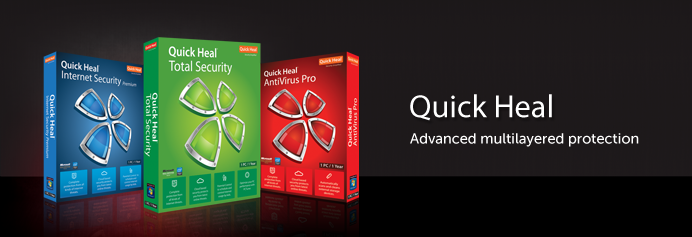
One good news is, Quick Heal will be supporting XP users for at least 2 years post the deadline of April 8, 2014.
2. Trust the Firewall
Equally essential is to turn ON the Firewall protection in your machine. As Windows in-built Firewall will also go out of support, it is only logical that your PC’s security software should have a Firewall of its own. A Firewall polices the perimeter of your PC, controlling who comes in and who goes out via the Internet traffic. It essentially acts as the first line of defense for your PC.
3. Get the Latest Patches
When calamity is about to strike, it is wise to add to your survival kit as much as you can. Ensure that your PC gets all Windows updates till April 8.
4. Backup your Data
Take a backup of all the important data you have on your XP machine. It is recommended to have the data stored in external drives and not on the machine itself. After the deadline, your XP machine will become extremely vulnerable to malware infections, and any sensitive data stored on it, may get compromised. And if it does, the backup will be your last resort.
5. Update Every Software and Application
Ensure that every software in your PC is completely up-to-date. Some software automatically update themselves, and some have to be done manually. So, better run a manual check on all the software and get them up-to-date. And as a general hygiene check, get rid of unnecessary software; especially those from third party and unverified publishers.
6. Using IE May Spell Trouble
Once XP support ends, we can expect a spike in the usage of browsers such as Chrome, Mozilla, Opera, etc. As Internet Explorer too will stop receiving any security updates, it is recommended to give the browser a good rest, and use its alternatives.
7. Browser Sandbox can Save you from Browser Infections
With no regular security updates, drive-by-downloads can become a major security concern. A drive-by-download occurs when a malicious file gets automatically downloaded when the user visits a compromised website. To counter this threat, it is important that your computer has browser sandbox protection. Browser sandbox acts as a protective shield between your PC’s operating system and any malicious downloads from the Internet.
8. Stop Using Microsoft Default Applications
Avoid using applications such as Windows media player. Use other alternatives that can be updated regularly. After April 8, Microsoft’s default email applications will also stop receiving security updates. So, using them may risk your computer’s security. Therefore, it is recommended to use alternatives such as Gmail, Yahoo Mail, etc., for your email communications.
9. Disable Vulnerable Browser Plugins
Browser plugins such as Java, Adobe Reader and Adobe Flash already have a history of being frequently targeted by hackers. Unless you need all these plugins, it would be in the best interest of your XP machine, to disable them or uninstall them completely.
10. Avoid Using Admin Accounts
To further reduce the risk of a malware attack and its damage, stick to a limited user account for day-to-day activities. Always remember, the intensity of damage caused by a malware infection depends on the type of user account. If you are using an administrator account presently, then you can follow these steps to add a limited account and use it.
11. Blacklist Potentially Dangerous Websites
Web filtering should also be an important step to consider when you are foolproofing your XP, particularly if your kids are using Internet on the machine. With a reliable parental control tool, you can blacklist specific websites which can be potentially unsafe. You can also such tools to block categories of websites that serve adult content, free software, etc., which are usually used by hackers to target their victims.
12. Disconnect the Internet
No method can secure your XP better than disconnecting it from the Internet. Although this option may not be viable for most users, it is the most foolproof method to deter malware attacks.
Reiterating what we have stated earlier, the best resolution for the upcoming XP doomsday, is to go for an OS upgrade or a new machine. But if you still do not want to let go of the 12-year old legend, then this should be a good time to bunker down and survive the end of XP with all the tips we just gave you.